




Successful Completion of Phase I
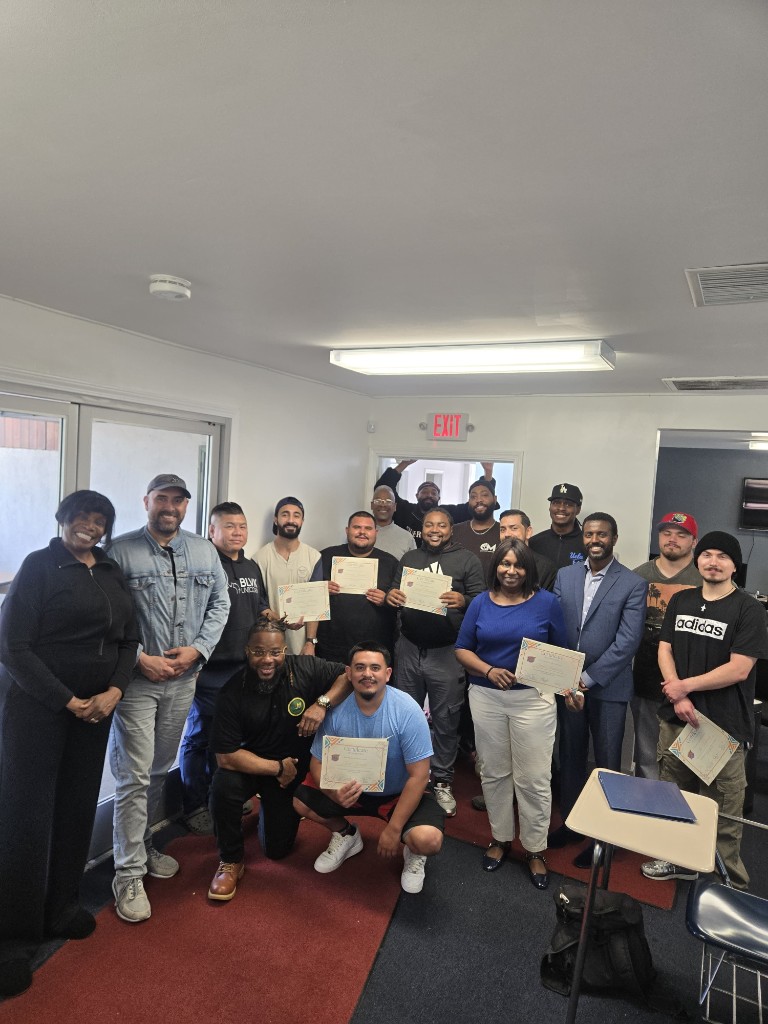
The successful completion of Phase I of the SoCal Career Ready Program marks an important milestone in preparing participants for workforce and career pathway success. Of the 11 students enrolled, 9 successfully completed Phase I, demonstrating commitment, resilience, and a willingness to engage in personal and academic growth. Phase I was intentionally designed to address foundational learning gaps—particularly in mathematics and workplace readiness skills—which are essential for success in high-demand sectors such as Construction, Green Technology, Health Services, and skilled trades. At the start of the program, many participants entered feeling uncomfortable, nervous, and apprehensive about their math abilities, often carrying prior academic frustrations and limited confidence in their ability to succeed in training environments requiring problem-solving and numerical reasoning.
Through a supportive, non-judgmental, and engaging instructional environment, participants were encouraged to strengthen foundational skills while building confidence in their own learning capacity. The program emphasized practical application, patience, individualized support, and real-world relevance, creating a safe space where students felt comfortable asking questions, making mistakes, and developing problem-solving strategies. By the conclusion of Phase I, participants demonstrated noticeable growth in confidence, persistence, self-awareness, and academic engagement. Students reported feeling more empowered and increasingly capable of advocating for themselves by asking clarifying questions, identifying areas where they needed support, and communicating their learning needs more effectively.
Program feedback has further reinforced the value and impact of this foundational learning phase. Participants enrolled in Fathers and Mothers Who Care's Electrical Training Program reported that the SoCal Career Ready Mechanical Math Class significantly strengthened their understanding of calculations, measurements, and problem-solving skills directly connected to the electrical trade. Students expressed that the math instruction helped bridge the gap between classroom learning and real-world application, making technical concepts more understandable and meaningful. Many participants shared that this additional support increased their confidence, improved classroom performance, and better prepared them for hands-on training and future employment opportunities. Students specifically noted that the Mechanical Math Class was highly beneficial because it connected mathematical concepts directly to the practical work they expect to perform in the field, reinforcing both relevance and motivation in the learning process.
The outcomes of Phase I reinforce the importance of addressing foundational learning gaps in a supportive and career-connected environment. When participants are met where they are academically and emotionally, they not only strengthen technical competencies but also build the confidence, self-advocacy, and persistence needed to successfully transition into workforce training and long-term career opportunities.